

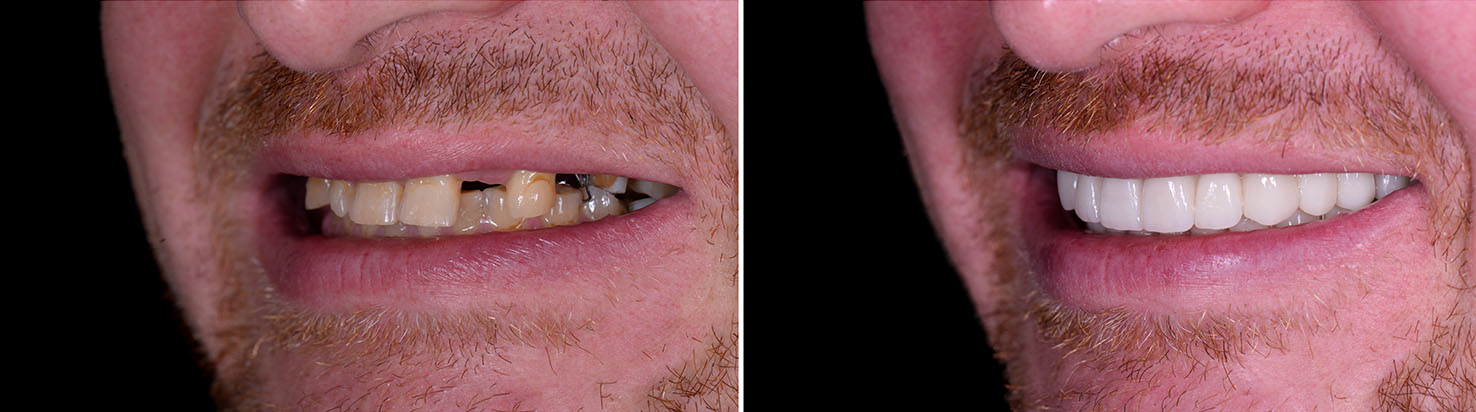
Missing teeth affect far more than your smile’s appearance — they can change how you chew, speak, and how your face looks over time. Advances in implant dentistry have made it possible to replace teeth in a way that restores function and supports the bone and surrounding tissues, producing results that are durable and lifelike. For many people, implants are the most predictable option for rebuilding a fully functional mouth.
Implants are engineered to integrate with the jawbone and act as a long-term foundation for crowns, bridges, or full-arch restorations. That integration stabilizes the bite and preserves facial structure, reducing the gradual bone loss that can follow tooth loss. Because they are designed from biocompatible materials and placed precisely, implants can deliver a level of comfort and performance similar to natural teeth.
If you’re exploring solutions for replacing one or more missing teeth, the team at the office of Greenville Smiles Dentistry can walk you through the clinical reasons implants are often recommended and how they compare to other options. Our goal is to help you understand the benefits so you can choose an approach that supports your health and long-term goals.

Unlike conventional bridges or removable dentures, dental implants replace the tooth root as well as the visible portion of the tooth. That root replacement is the key difference: it preserves the bone and provides anchorage for replacement teeth that won’t shift or slip. For patients who want stability and a natural feel while chewing, this distinction is often decisive.
Implants also allow restorations to be fabricated that closely match the color and contours of adjacent teeth, improving both function and aesthetics. Where removable options can affect taste, speaking, or comfort, implant-supported restorations tend to restore daily life with fewer compromises.
Finally, implant restorations are modular: the implant, abutment, and crown or prosthesis can be planned and adjusted independently. This flexibility makes it easier to achieve precise occlusion and a comfortable bite while conserving healthy neighboring teeth whenever possible.
At the most basic level, a dental implant is a small, threaded post made of titanium or another biocompatible material. The post is placed into the jawbone and, over time, the bone grows around it in a process called osseointegration. Once that connection is stable, the implant functions as a reliable base to support crowns, bridges, or denture attachments.
This staged approach — placement, healing, and restoration — is designed to offer reliable outcomes. While some clinical situations allow for earlier restoration, standard protocols emphasize careful planning and healing time to maximize long-term success and minimize complications.
Modern imaging and computer-assisted planning make it possible to place implants with exceptional precision, reducing surgical time and improving restorative fit. Those technological advances contribute to predictable outcomes and help clinicians design results that look and feel natural.
Patients commonly choose implants because they restore confidence and practical function. Implants feel more secure while eating and speaking, and they remove many of the maintenance hassles associated with removable dentures. This improved stability can make everyday activities — from enjoying a steak to laughing in public — feel more natural.
Another advantage is the preservation of bone and facial structure. An implant stimulates the surrounding bone similarly to a natural tooth root, which helps slow or prevent the bone loss that typically follows tooth extraction. Over time this can make a noticeable difference in how the lower face is supported.
When placed and cared for properly, implants are also highly durable. They are resistant to decay (though the surrounding gums and supporting structures still require regular care), and good oral hygiene plus routine dental visits help protect the investment for many years.

For a single missing tooth, an implant restored with a custom crown replicates the look, function, and independence of a natural tooth. This single-tooth approach avoids altering neighboring healthy teeth the way a traditional three-unit bridge would, preserving more of your natural dentition while restoring your smile.
Clinically, a single implant can be ideal when the adjacent teeth are sound and when bone volume is sufficient to support the implant. The restorative crown is matched to the color and anatomy of surrounding teeth, creating a seamless appearance that blends naturally into your smile.
Because the implant supports a solitary crown, maintenance is similar to caring for a natural tooth: daily brushing, flossing, and routine professional cleanings help maintain both the restoration and the tissues that support it.
When two or more adjacent teeth are missing, implant-supported bridges offer a stable alternative that maintains bone while avoiding the need to prepare intact teeth for crowns. Strategically placed implants support the bridge and restore chewing function without compromising neighboring dentition.
For patients missing an entire arch, a full-arch restoration supported by four to six implants can recreate a fixed, non-removable set of teeth. This method often delivers superior function and comfort compared with traditional full dentures and can be planned to allow provisional teeth during the healing phase.
There are also implant-retained removable dentures, which provide improved stability and retention without requiring a full fixed bridge. These hybrid approaches let patients choose a solution that balances comfort, hygiene access, and aesthetics.
Determining candidacy for implants involves a careful assessment of your overall health, oral condition, and bone volume. Factors such as systemic health, gum disease, and smoking can influence treatment planning and healing, so a comprehensive evaluation is essential to create a predictable plan.
Advanced imaging, including digital radiography and three-dimensional scans, allows clinicians to visualize bone anatomy and plan implant positioning precisely. That planning helps avoid critical structures and optimizes the angle and depth of each implant for long-term success.
Even when bone volume is reduced, modern grafting techniques and staged approaches make implant therapy possible for many patients. The goal of the planning phase is to create a treatment path that balances immediate needs with long-term stability.
Implant placement is typically performed as outpatient surgery under local anesthesia, often with options for sedation if desired. The complexity of the procedure varies by case: a single implant can be straightforward, while full-arch reconstructions or grafting procedures may require additional steps.
After placement, a healing period allows the implant to integrate with the bone. Some protocols support provisional restorations during this healing phase, while others prioritize complete osseointegration before final restoration. Throughout, clear communication about anesthesia, recovery expectations, and aftercare helps patients feel prepared and comfortable.
Our practice emphasizes meticulous technique and follow-up to reduce risks and support successful healing. Good post-operative instructions and routine monitoring play important roles in long-term outcomes.
Sufficient bone at the implant site is essential for stability. When teeth are lost, the supporting bone often resorbs over time; periodontal disease and prior infections can also reduce bone volume. Bone grafting rebuilds or reinforces the site so an implant can be placed securely and withstand the forces of chewing.
Grafts may be performed at the time of extraction, prior to implant placement, or simultaneously with the implant depending on the situation. The objective is to create an environment that supports healthy bone remodeling and a durable foundation for the implant.
With modern grafting materials and techniques, many patients who once were considered unsuitable for implants can now pursue implant therapy successfully.
Clinical studies report high long-term success rates for properly planned and maintained implants. That success depends on both the quality of the initial planning and the patient’s ongoing oral care. Regular dental exams, professional cleanings, and consistent home hygiene help preserve the implant and the surrounding tissues.
Protecting against gum disease and avoiding habits that strain the implants (such as heavy clenching without protective measures) also contribute to longevity. When managed proactively, implants can remain stable and functional for many years.
Our team treats each case with individualized attention to surgical technique, restorative design, and preventive care to maximize the odds of long-term success.
Replacing missing teeth with dental implants offers a combination of function, appearance, and oral health benefits that many patients find compelling. Whether you’re missing a single tooth or an entire arch, there are implant-based options that can be tailored to your needs and lifestyle.
If you’re considering implant dentistry, our team can guide you through the evaluation and planning process, explain the clinical steps involved, and help you understand how implants may fit into your overall oral health plan. We focus on delivering care that balances technical excellence with a comfortable patient experience.
Contact us to learn more about implant options and how they may help you rebuild a complete, healthy smile.


A dental implant is a small, threaded post made from a biocompatible material that is placed into the jawbone to replace a missing tooth root. Over time the bone grows around the implant in a process called osseointegration, which creates a stable foundation for a crown, bridge, or denture. Once integrated, the implant supports a restoration that restores chewing function and helps preserve surrounding bone and tissue.
The treatment typically follows a staged approach of planning, placement, healing, and restoration to maximize predictability. Modern imaging and computer-assisted planning improve placement accuracy and restorative fit. This design allows implants to perform much like natural teeth while protecting the health of neighboring teeth.
Unlike conventional bridges or removable dentures, implants replace the tooth root as well as the visible portion of the tooth, which helps preserve bone and provides superior stability. Implant-supported restorations resist shifting and slipping, improving comfort while eating and speaking compared with removable options. Because they do not rely on adjacent teeth for support, implants help conserve healthy neighboring teeth that might otherwise be altered for a bridge.
Implant restorations can be matched to the color and contours of surrounding teeth for a natural appearance, and the modular design of implant, abutment, and crown allows precise adjustments. Maintenance focuses on regular oral hygiene and professional care, and many patients find the daily function and confidence provided by implants to be a significant advantage. For some situations a removable implant-retained denture or an implant-supported bridge may offer a balance between accessibility and stability.
Candidacy for implants depends on overall health, the condition of the gums, and sufficient bone volume at the implant site. Factors such as uncontrolled systemic disease, active gum infection, or certain medications can affect healing, and habits like tobacco use may increase risk; many of these issues can be managed so patients can still pursue implants. A comprehensive evaluation including a medical history, clinical exam, and imaging is required to determine suitability and to develop a personalized plan.
Advanced imaging helps clinicians assess bone anatomy and identify any need for preparatory treatments such as gum therapy or bone grafting. When deficits exist, grafting or staged approaches often make implant therapy possible for patients who were previously considered unsuitable. The goal is to create a stable, long-term solution tailored to each patient's oral and overall health.
Treatment begins with a consultation, medical review, and diagnostic imaging to plan implant position and the final restoration. Placement is usually performed as outpatient surgery under local anesthesia, with sedation options available for comfort in many cases. The implant is then allowed to heal while the bone integrates with the implant surface.
After osseointegration, the restorative phase involves attaching an abutment and fabricating a crown, bridge, or denture to complete the tooth replacement. Some protocols permit provisional restorations during healing while others wait for full integration before final restorations. Timelines vary by case, so clear communication and follow-up visits help ensure successful outcomes.
Initial recovery after implant placement commonly involves mild swelling, bruising, and discomfort that can be managed with prescribed or over-the-counter medications and cold packs. Most patients resume normal light activities within a day or two, while avoiding strenuous exertion for several days; a soft diet is usually recommended for the first few days to protect the surgical site. Your clinician will provide specific instructions for oral hygiene, diet, and activity to minimize complications.
Complete healing and osseointegration take longer, often several months, during which periodic checkups monitor progress and the health of surrounding tissues. Some patients receive provisional restorations so they can function and feel comfortable while the implant integrates. Adhering to follow-up schedules and aftercare guidance helps support predictable, long-term results.
Sufficient bone volume at the implant site is essential for long-term stability, and bone loss after tooth extraction, periodontal disease, or infection can make implant placement difficult. When the available bone is inadequate, bone grafting rebuilds or reinforces the site so an implant can be placed with the proper support and orientation. The objective of grafting is to create a biologic environment that will integrate with the implant and withstand chewing forces.
Grafting can be performed at the time of extraction, prior to implant placement, or simultaneously with the implant depending on clinical findings. In the upper jaw, a sinus lift may be necessary when the sinus floor is too close to the intended implant site. Materials and techniques vary from autografts to allografts and synthetic options, and your clinician will recommend the best approach based on your anatomy and treatment goals.
Implant restorations range from single crowns to multiunit bridges and full-arch fixed solutions, allowing clinicians to match the prosthetic design to each clinical need. A single implant restored with a custom crown replaces one tooth without affecting adjacent teeth, while implant-supported bridges can replace multiple adjacent teeth using fewer implants than individual crowns. For patients missing an entire arch, fixed full-arch restorations anchored by four to six implants can recreate a non-removable set of teeth with excellent function.
There are also removable implant-retained dentures that offer improved retention and stability while permitting easier hygiene access. Provisional restorations can be planned so patients maintain function and appearance during healing. The optimal restorative design balances aesthetics, hygiene accessibility, comfort, and long-term maintenance.
Long-term implant success depends on meticulous daily home care and regular professional maintenance. Brush twice daily with a soft-bristled brush, use interdental brushes or floss designed for implants, and follow any supplemental cleaning instructions provided by your team. Avoid tobacco use and report any signs of redness, swelling, bleeding, or looseness to your dentist promptly.
Professional cleanings and periodic examinations allow clinicians to monitor tissues and detect early changes such as peri-implant inflammation. Patients who grind or clench may benefit from a protective night guard to reduce excessive forces on restorations. Consistent preventive care preserves both the implant restoration and the supporting gums and bone.
Complications can include infection at the surgical site, inadequate osseointegration, peri-implantitis (inflammation around the implant), and, rarely, nerve or sinus involvement depending on anatomy and surgical factors. Careful assessment, precise surgical technique, and attentive postoperative care reduce the likelihood of these events. Early detection and appropriate management are important to address problems before they threaten the implant.
Certain patient-related factors such as poor oral hygiene, smoking, uncontrolled systemic conditions, or excessive bite forces can increase complication risk. A personalized treatment plan that addresses these risks and includes regular follow-up care helps minimize complications and promotes predictable long-term outcomes.
The office of Greenville Smiles Dentistry uses advanced imaging and digital tools to improve planning and placement accuracy, including three-dimensional imaging and digital radiography to visualize bone anatomy and critical structures. Computer-assisted planning and guided surgical techniques help position implants precisely to optimize restorative outcomes and reduce surgical time. When appropriate, digital restorative workflows support efficient communication between surgical and laboratory phases for precise prosthetic fit.
These technologies support individualized treatment, safer procedures, and predictable esthetic and functional results by allowing the team to rehearse implant placement and design restorations virtually before surgery. Clear communication about the plan, timeline, and follow-up care helps patients understand each step and what to expect throughout treatment. If you would like a personalized evaluation, a consultation review of your imaging and goals is the best first step.

Have a question, or ready to schedule your next visit?
Our friendly team at Greenville Smiles Dentistry is here to help. Whether you'd like to book an appointment, ask about a treatment, or find out more about our practice, we're just a call, email, or message away. Reach out today, and let's get you on the schedule.

Back to top